
 HOHEGEIß, GERMANY & WARWICK, QUEENSLAND, AUSTRALIA
Christian Friedrick (‘Fred’) KYLING
b. 16 Apr 1832 Hohegeiß, Blankenberg, State of Bruzwig, Germany ; parents Johann Andreas KYLING & Henriette Christiane HARTUNG
d. 23 Dec 1886 Warwick, Qld ; buried Warwick
Fred Kyling migrated to Australia aboard the Johann Caesar in 1856
m. 23 Sep 1862, St Mark’s (C of E), Warwick, Qld
Sophia ‘Caroline’ SCHWEINSBERG
b. c1840 Hessen, Germany
d. 19 Jul 1906 Willowburn, near Toowoomba, Qld ; buried Warwick, Qld
Children
| 1. Annie KYLING | b. 13 Feb 1859 Warwick, Qld ; d. 1890 Sydney, NSW – 4 children Annie was born Hannah SCHNITZERLING, a child of Caroline’s first marriage to Conrad SCHNITZERLING |
| 2. Amelia KYLING | b. 13 Nov 1860 Warwick, Qld ; d. 12 Jul 1948 Qld ; m. 28 Sep 1878 Qld – John DOLLER – 8 children Amelia was born Mary SCHNITZERLING, a child of Caroline’s first marriage to Conrad SCHNITZERLING |
| 3. Frederick KYLING | b. 15 Mar 1863 Warwick, Qld ; d. 24 Dec 1916 Warwick, Qld ; buried Warwick, Qld ; m. 25 Jun 1890 Warwick, Qld – Elizabeth DIPPLESMANN (b. 28 Aug 1864 Warwick, Qld ; parents Henry DIPPLESMANN & Anna Martha SCHNITZERLING ; d. 20 May 1939 Warwick, Qld) – 9 children |
| 4. Henrietta Caroline KYLING | b. 18 Sep 1864 Warwick, Qld ; d. 19 Dec 1943 Brisbane, Qld ; buried Warwick, Qld ; m. 8 Aug 1894 Qld – James STEELE (parents Robert STEELE & Jane ACKENHEAD) – 12 children |
| 5. Christian William Harry KYLING | b. 7 Sep 1866 Qld ; d. 18 Jun 1904 Qld ; buried Warwick, Qld ; m. 25 Sep 1889 Qld – Jane ECKHARDT (b. 1869 ; d. 1941 Qld ; buried 10 Oct 1941 Toowong Cemetery, Brisbane, Qld) – 3 children Displaced Relics of Henry Kyling |
| 6. Margaret Mary KYLING | b. 2 Jun 1868 Qld ; m.1 12 Feb 1890 Qld – Rudolf Adolph WOLF- 1 child ; m2. 11 Feb 1892 Sydney, NSW – Charles Henry MARTIN (b. 1868 Wollongong, NSW ; parents Julius MARTIN & Sarah McKENZIE) – 6 children |
| 7. John ‘Charles’ William KYLING | b. 26 Mar 1870 Qld ; d. 10 Jul 1871 Warwick, Qld ; buried Warwick, Qld |
| 8. Catherine KYLING | b. 23 Jan 1872 Warwick, Qld ; d. 9 Oct 1875 Warwick, Qld ; buried Warwick, Qld |
| 9. Mary Sophia KYLING | b. 11 Apr 1874 Warwick, Qld ; d. 1948 Burwood, NSW ; m. 1 Oct 1890 St.Mark’s (C of E), Warwick, Qld – Edward John VENESS (b. 25 Jul 1866 Tamworth, NSW ; parents Daniel Edward VENESS & Mary Jane CUSH ; d. 20 May 1933 Manly, NSW) – 1 child |
| 10. John William KYLING | b. 17 Apr 1876 Warwick, Qld ; d. 8 Jun 1947 Brisbane, Qld ; cremated Brisbane Crematorium, Qld ; m. 13 Oct 1905 Brisbane, Qld – Florence Mary Rosaleigh WEBSTER (b. 15 Aug 1887 Downfall Creek, Caboolture, Qld ; parents George Thomas WEBSTER & Alice Jane PAYNE ; d. 20 Aug 1951 Brisbane, Qld ; buried South Brisbane Cemetery, Qld) – 4 children |
| 11. William KYLING | b. 13 Jan 1879 Warwick, Qld ; d. 14 Feb 1954 Brisbane, Qld ; cremated Brisbane, Qld ; m. 1909 Sydney, NSW – Ivy May SCHIFFMANN (b. 1887 Tenterfield, NSW ; parents Joseph SCHIFFMANN & Emily BRIDGELAND ; d. 6 Nov 1974 Brisbane, Qld ; cremated 7 Nov 1974 Mt Thompson Crematorium, Qld) – 7 children |
| 12. Lizzie Maria KYLING | b. 26 Nov 1881 Warwick, Qld ; d. 2 Jan 1886 Warwick, Qld ; buried Warwick, Qld |
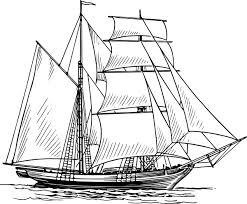 Ship : Johann Caesar (1856)
Departed: 30 Sep 1855, Hamburg, Germany
Arrived: 3 Feb 1856, Moreton Bay, Qld
Master: Captain Nicholas Stertenbecker
24-year-old Christian Friedrick (‘Frederick’) Kyling travelled to Australia aboard the Johann Caesar.
Particulars: German bark ; aka Johan Caesar or John Caesar ; 390 t ; built at Reiherstieg, Hamburg, by shipping magnate Johann Cesar Godeffroy (J.C.Godeffroy & Company) in 1851/52 ; registered 3 September 1852 ; 37,9 x 8,1 x 5,12 metres (length x beam x depth of hold) ; “sold Swedish” in 1880, to Bjorksgren, Kalmar, and renamed Ingegerd ; sailed to Australia via Calcutta, reaching Moreton Bay on 8 February 1856.
Notes: The Darling Downs, Queensland, during the 1830s to 1860s was divided into large lease land holdings. In the 1850s there was a labour shortage on the pastoral properties of the Darling Downs due to the pastoral workers vanishing to the gold fields. To counter this phenomenon, the squatter aristocracy used German agents to recruit German shepherd migrants who were brought out under contract between 1852 and 1855. As the squatter’s properties were unfenced, a Shepherd’s job was to live in isolated areas of the property and protect a flock of sheep from dingoes, aboriginal hunters and generally keep the flock in the boundaries of the station. They proved to be reliable, frugal and sober workers who managed to save sufficient cash out of their wages of 20 to 30 pounds per year (and rations) to enable them to purchase land in the sixties. These immigrants were forced to come out not through religious persecution as their South Australian counterparts had done but through agricultural disasters that caused famine and abandonment of uneconomical land holdings caused by generations of land division.
References: Immigrant Ships Information
 Fred’s migration Information
From Auswandererlisten des ehemaligen Herzogtums Braunschweig 1846-1871 (Emigration Lists of the former Duchy of Brunswick) by Fritz Gruhne, p.111 under the heading ‘Hohegeiß’ (seidenwirkergesell means silk weaver, backermeister means master baker):

And the passenger list identifies Fred as aged 24 and a native of Hohegeiß, Braunlage:

 Place Note : Hohegeiß
Hohegeiss (German: Hohegeiß) is nowdays a health resort and winter sports village in the Harz mountains range, Germany. Since 1972 Hohegeiss has been part of the town of Braunlage, in the district of Goslar in Lower Saxony, Germany.
The place name first appears in 1268 as Hogeyz ; not yet as a settlement, but as a forest area. 1444 a chapel was built, around which a settlement had formed in 1528, which 1573 for the first time as "village Hohegeist". From 1701 to 1704, the Protestant church "Zur Himmelspforte" was built. From 1720 mines were set up in the valleys around Hohegeiß, which were in operation until 1770. Hohegeiß was reachable for the first time by public transport in 1842, when the postal route Braunschweig-Blankenburg supplied some Upper Harz villages and also allowed stagecoaches to travel from Blankenburg via Hohegeiß to Walkenried. In the same year, the road to Braunlage (today's federal highway 4) and the road to Zorge (today's state road 602) were completed. Efforts to rail connection, however, were unsuccessful, neither was the Harzquerbahn over Hohegeiß conducted nor the proposed further construction of the railway line Ellrich-Zorge realized to Hohegeiß.
(Wikipedia)
Fred Kyling left Hohegeiß in the 1850s, and the village would not see a centralised water supply until 1911 nor power supply until 1920.
 Notices and headstone – Fred & Caroline Kyling
Illness of Mr Kyling.-We learn with regret that Mr. Kyling, the proprietor of the European Hotel, lies seriously ill at bis residence in Grafton-Street. The sympathies of his many friends will be with him and his family in this affliction, and we are sure we shall be expressing the feelings of them all, when we wish him a speedy recovery to health and strength.
(Warwick Argus, 18 Dec 1886, p. 2)

Obituary- We regret to record the death of Mr F. Kyling, which took place at his late residence, the European Hotel, Grafton-street, on Thursday morning. The deceased had been ailing for a considerable time and had borne his sufferings with great patience and fortitude. Well known and respected in Warwick, we are sure the news of his decease will elicit the sympathy of the many acquaintances of the widow and family. The funeral took place yesterday and was largely attended.
(Warwick Argus, 25 December 1886 p.2)

The Warwick Examiner of 24th instant records the death of Mr Frederick Kyling, which took place at his residence on Thursday morning last. The cause of death was an internal complaint, from which he suffered great pain. He had been in the colonies for thirty-two years, twenty-one of which were spent in Warwick. Four years ago ho purchased the European Hotel, where he conducted business up to the time of his death.
(Brisbane Courier, 28 Dec 1886, p.2)
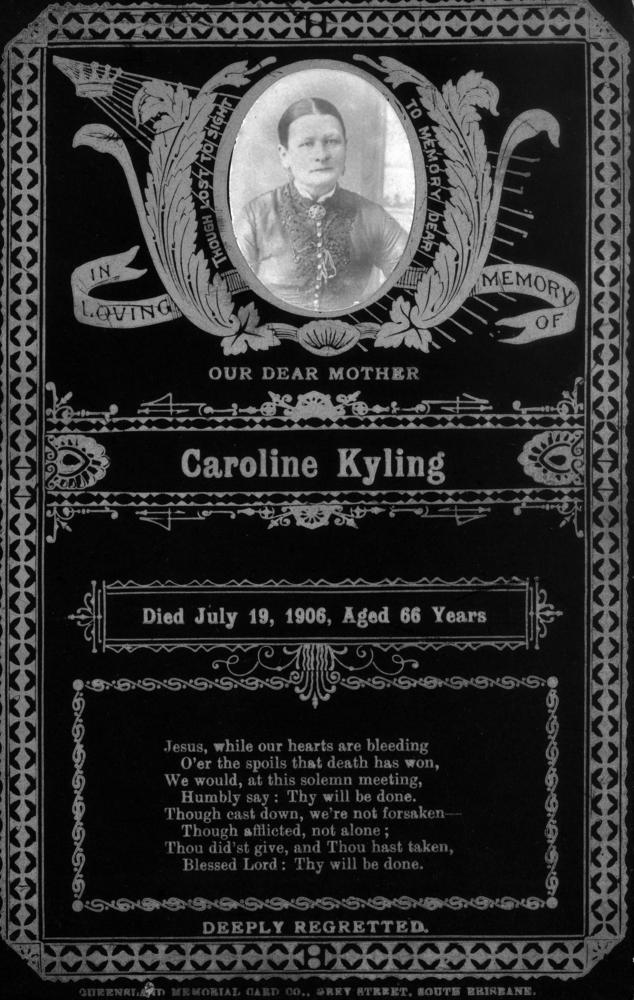
(State Library of Queensland) 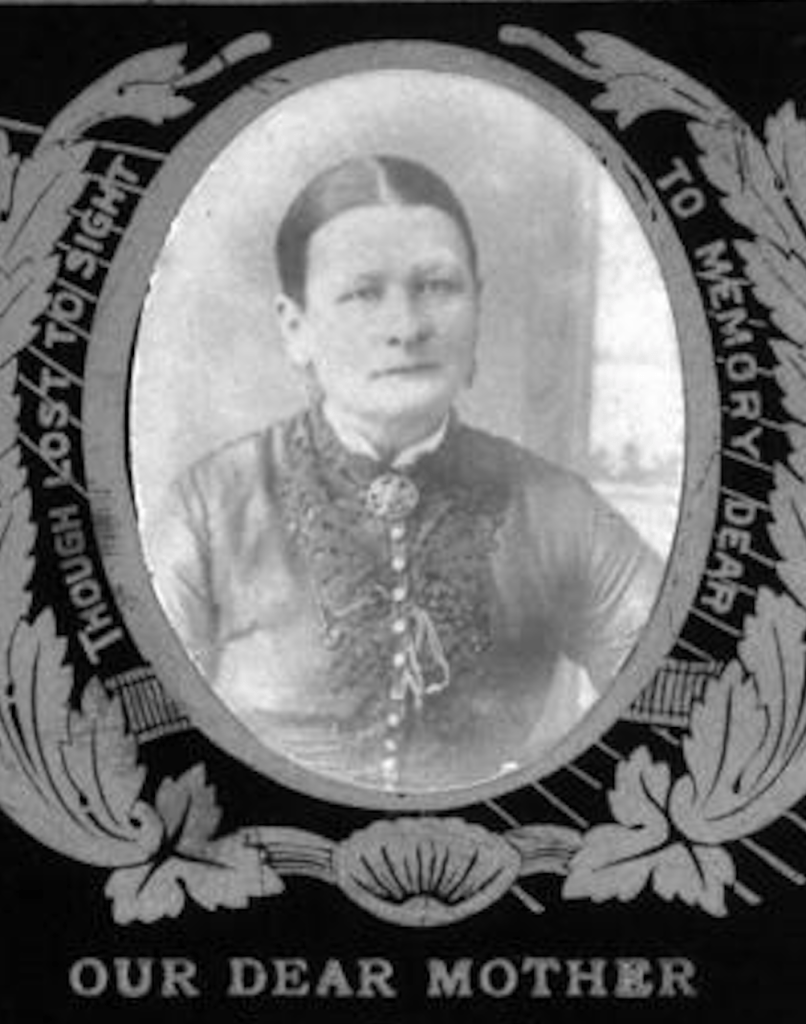
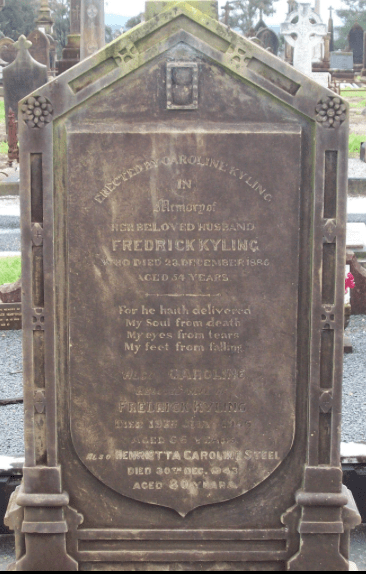
Grave of Fred and Caroline Kyling
Headstone inscription:
Erected by Caroline Kyling in memory of her beloved husband
Frederick Kyling who died on 23 December 1886 aged 54 years.
For he hath delivered my soul from death, my eyes from tears, my feet from falling.
Also Caroline, beloved wife of Frederick Kyling, died 19 July 1906 aged 66 years.
Also Henrietta Caroline Steele died 30 December 1943 aged 80 years.
 Christine's Compendium of Family History