Photo Gallery of a Petty Criminal

Photo Gallery of a Petty Criminal

Many hardworking, law-abiding ancestors have lived their lives leaving behind a sparse and unremarkable trail of records, and often no images. My great-grandmother’s brother Leo Albert Worthington was not one of these people. His criminality spread over thirty-five years and at least eleven aliases.

I’ll start by saying that Leo was not a particularly good criminal, as his arrest record seems to show.

I’ll also state from the outset that even though Leo’s family life was rough and poverty-stricken, this is not meant to provide excuses for Leo’s actions, only to provide some context for his life.

He was born on 26 September 1893 at Forbes in central New South Wales to John Joseph and Mary Ann Worthington. He was the ninth child of eleven children. As the drought and depression of the 1890s set in, John Joseph lost his farm at Moonbi and the family moved into the Forbes township and he took work as a contract labourer. When work opportunities dwindled in 1900 he left the family, going north to seek work and was never seen again. Mary Ann went to the police in 1903 reporting him missing and a warrant was issued to no avail. She stated that she and the children were left destitute.

Mary Ann took the children to Cobar where her mother lived. Here the family were subject to a number of sad events, one being that on 4 Apr 1905 Leo, aged only 12, was convicted of stealing goods from a railway carriage at Cobar and was sent to the Carpentarian Reformatory for Boys for three years.

The Carpentarian Reformatory was established at Brush Farm, Eastwood, NSW in Sydney’s north west. It was named after the philanthropist, Mary Carpenter. At the time Leo was sent there it was run by the State Children’s Relief Department.

A year before Leo got there, the annual report of the Reformatory was reported on in the Goulburn Herald:

THE CARPENTARIAN REFORMATORY.
THE annual report of the superintendent of the Carpentarian Reformatory, Mr F. Stayner, has been received by the Minister for Education. Dealing with the way in which inmates are recruited, he says they come to the institution from the various police courts, quarter sessions. and so on for minor offences. Instead of sending them to jail, the magistrate orders them to the institution for not less than one year and not more than five years. Sometimes, however, the lads are not allowed to remain for a year, and no impression can be made on them in less than the time named, and nothing taught them in less than two years. Truancy and wandering in the streets also furnish their crop of recruits to the reformatory. Several trades are taught, such as tailoring, joinery, boot-making, and so on, and the boys are also employed in gardening and orchard work. Out of 361 boys who have at various times been discharged from the institution, 83 per cent have turned out well.
(Goulburn Herald, 1 April 1904, p.5)

Leo was unfortunately not to be amongst the reformatory’s success stories.

If he was released after the three years was up, it would have been a month before the death of his grandmother aged 85 at Cobar, but there is no evidence that he returned to Cobar. In fact, it’s hard to pinpoint where he was until his next convictions in May and June 1914 in Sydney for drunk and disorderly, stealing from the person and indecent language. His sheet has him as a labourer from Forbes who was born on 23/07/1893.

By this time he was aged 21 and had the tattoos that would appear beside all his mugshots ‘pierced heart inside left forearm and woman’s head outside right upper arm’.
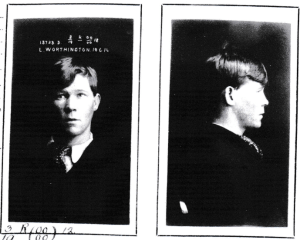
Leo Worthington, Sydney, 1914

At some stage, Leo’s mother contracted tuberculosis and from September 1914 until March 1916 she was a resident at the Waterfall hospital for consumptives. She succumbed to the illness on 20 March 1917 and Leo’s name was left off the family notice in the newspaper.

In the meantime, in 1915-1916 Leo was racking up convictions at Molong, Crookwell and Sydney, mostly for bad behaviour and violently resisting arrest.

Two months after his mother’s death, on 8 May 1917 Leo, aged 23 and apparently a shearer, enlisted in the Australian Imperial Force, 1st Light Horse. Though the lives of soldiers were difficult and dangerous, for young men with few prospects, enlistment in the armed services could provide an opportunity to break out of a cycle of crime, to travel, to be a part of something, and two of his brothers had already enlisted. However, Leo was discharged on 28 Nov the same year because of his criminal convictions.

In August 1917, before he was officially discharged, he was convicted in Sydney for two charges of shop breaking for which he received a sentence of two years. His sheet says he was a labourer from Forbes who was born on 23/07/1893.
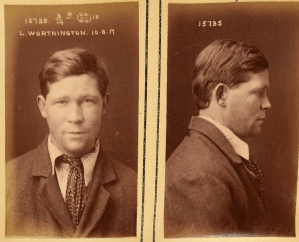
Leo Worthington, 1917

After release (and before his prison haircut had had time to grow out) in October 1919 he was charged in Sydney with unlawfully wearing a military uniform and a month later with shooting with intent to cause grievous bodily harm, for which he was sentenced to 12 months. He used the name Edward Vivian Miller and said he was a wool classer from Orange born 3/8/1894.
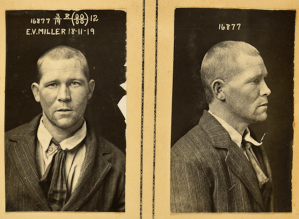
‘Edward Vivian Miller’, 1919

On 9 November 1920 at Maitland Quarter Sessions he was convicted for breaking into a warehouse and stealing goods valued at £300 and sentenced to four years penal servitude. His sheet has him using the name Edward Mullins, a labourer from Forbes born on 01/08/1893.

‘Edward Mullins’, 1920

After release, he was charged in May 1924 with attempting to break into a shop with intent to steal. He absconded after release on bail. He finally ended up at Sydney Quarter Sessions in May 1926 and was sentenced to three years hard labour.
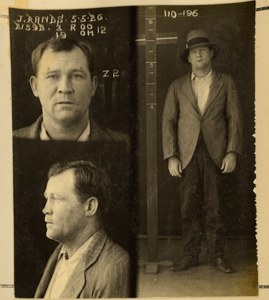
‘James Rands’, 1926

In 1928 his photo was retaken for some reason, and he doesn’t seem very healthy.
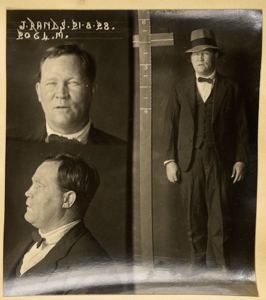
‘James Rands’, 1928

Upon release, Leo ended up in Victoria where he was convicted of shop breaking and sentenced to 12 months. He used the name George Monaghan, and said he was a native of Victoria born in 1893.
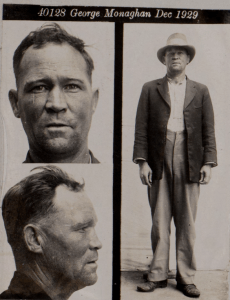
‘George Monaghan’, Victoria, 1929
Having pleaded guilty to a charge of shop breaking, George Monaghan, who said that his correct name was Leo Worthington, aged 36 years, shearer, of Gertrude Street, Fitzroy, admitted 14 previous convictions, mostly in New South Wales.He had served a sentence of imprisonment for 12 months for shooting with intent to do grievous bodily harm and a sentence of imprisonment for four years for shop breaking.

Judge Moule said that on the occasion which had given rise to the charge nothing of much value had been stolen. Monaghan would be sentenced to imprisonment for 12 months. He would also be declared an habitual criminal and would be detained in a reformatory prison at the expiration of his sentence during the pleasure of the Governor.
(The Argus, 14 Dec 1929, p.32)

I’ve given an overview of some of the crimes that caused incarceration on the occasions of his photographs being taken, but his petty criminality extended well beyond these charges, and finding all reports in the police gazettes to put together a timeline was like untangling a ball of sticky wool. Apart from Edward Vivian Miller, Edward Mullins, James Rands and George Monaghan, he used the aliases Joseph Downey, James Downey, Ernest Sergeant, James Mitchell and James Cavanagh. It must have been a very difficult job for the police to match up descriptions of offenders trying to evade detection by giving false information. Additionally, many of his cohorts had numerous aliases. Fortunately, each prison portrait sheet contains all the known aliases and all the previous photograph numbers so it’s relatively easy to collect the set.

The online criminal photographs go up to 1930, and when further records go up there will be at least two more photos to add to the gallery from the next decade.

In March 1933 Leo was sentenced to twelve months’ imprisonment for having stolen a silver watch and chain from a man in the street in Sydney. He was convicted under his own name and was recorded as a 41-year-old labourer.

In 1934 he was sentenced to six months’ imprisonment for possession of an unregistered automatic pistol at Redfern. Ballistics testing on that pistol revealed that it was a match for a casing found at the scene of a shooting that had occurred at Glebe four days before the gun was recovered.

Arthur North of Glebe had initially told police that he had found the gun in an alley at Redfern nine months before he was shot in the leg, that it had accidentally gone off while he was looking at it, and that he had given it away before police arrived at the scene.

When Leo’s involvement was unearthed by the ballistics, he said that he had taken the gun to North’s house, and that he was showing North how to use it when it accidentally went off, and that he had fled the scene and called an ambulance. The story was corroborated by North and accepted by the magistrate.

In police circles, the case is regarded as being of considerable importance in that it established a precedent for the legal acceptance of ballistics photographs. Science had proved that both shells had been fired from the same weapon and the proof was corroborated — if proof can be corroborated— by the dramatic admission of Worthington that the shot which wounded North was fired from the identical pistol.
(The Truth, 8 April 1934, p. 19)

I don’t believe that anyone else in the family has ever made a contribution to forensic science but, apparently, The Truth thought Leo did!
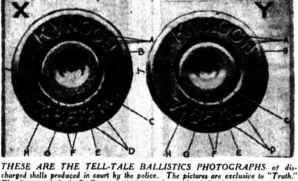
In June 1939 he was sentenced to three years imprisonment for assault and robbery at Maroubra in January that year.

After the expiration of this sentence, things seemed to settle down. In 1943 Leo was living in Bourke Street, Surry Hills and is recorded as a labourer in the electoral roll. In 1949 he was living in Toowomba and is recorded as a labourer.

In 1951 he married Rose Ann Mitchell Cuddy (nee Teague) at Toowomba. He was 58 years of age and Rose Ann was 75. In 1954 they both appear in the electoral roll residing in White Street, Everton Park, a suburb of Brisbane.

Rose Ann died in 1956 aged 79 and was buried at Lutwyche Cemetery, Brisbane. In 1958 Leo was living at 139 Latrobe Terrace, Paddington, an inner suburb of Brisbane, and working as a salesman.

Leo died on 26 Feb 1961 in Brisbane Hospital of heart failure, the culmination of heart problems he had apparently been suffering with for about 12 years. He was buried with Rose Ann at Lutwyche Cemetery.

Leo’s youngest brother Eugene Henry (‘E. Worthington, brother, 68 Albany Road, Stanmore, Sydney, New South Wales’) gave information for his death certificate. Interestingly, Gene gave their father’s name as Leo Albert Worthington.

Unsurprising that Gene would be hazy on his father’s name, as he hadn’t seen him since he was four years of age. Leo’s passing left Gene as the only living child of the family.

What Happened to Florence?

What Happened to Florence?

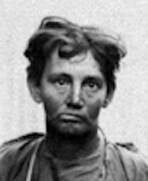
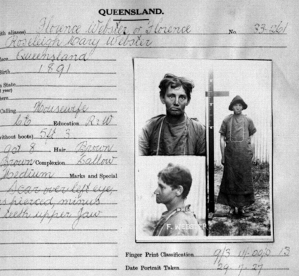
Many hardworking, law-abiding ancestors have lived their lives leaving behind a sparse and unremarkable trail of records, and often no images. My great-grandmother Florence Rosaleigh Mary Webster was not one of these people. The details of her early life are a little hazy, but her descent into vagrancy, alcoholism and petty crime kept Brisbane law enforcement and court reporters occupied for over two decades.


Florence’s life began near Caboolture, Queensland in an area ironically called Downfall Creek. Now a part of Chermside West, it was possibly named in 1843 by missionary and farmer Carl Friedrich Gerler (1817-1894) when a bullock dray broke down there while establishing a mission outstation at Caboolture.

Her father, George Thomas Webster, had been born in Maldon, Victoria, where his father Joseph searched for gold. Joseph and Elizabeth Webster moved their family to Queensland in around 1867 and farmed at Downfall Creek and later at Kilcoy. The year 1867 coincides with reports of gold having been discovered in the area, so no doubt he Joseph Webster made some efforts in that regard as well.

On 16 May 1883 at the Methodist Church in Ann Street, Brisbane, George married 16-year-old Alice Jane Payne. Alice was born in Birtsmorten, Worcestershire, and had migrated to Australia with her parents at the age of 10. At the time of the marriage, George was a 22-year-old labourer of Downfall Creek, and Alice was a resident of South Brisbane, so how the two became acquainted is unknown.

George and Alice’s firstborn was a boy named William Joseph, born on 18 June 1884, but he died only 40 days later on 28 July, and was buried at Lutwyche Cemetery. Next came George ‘Victor’, born 1885, then Florence Rosaleigh Mary in 1886, then George Arthur in 1889.

A little boy, aged three years, named Victor Webster, was drowned in a well on Tuesday at Downfall Creek. The lad was on a visit to his aunt, and between 11 and 12 o’clock he was missed. His aunt called him, but getting no answer she went outside and looked down the well in the back yard. There she saw bubbles coming to the surface, shortly followed by the boy’s head. She immediately ran to where her father was working, a distance of about one mile. When he arrived he took the body out of the well. The well was roughly covered by a few slabs. An enquiry will be held.The Week (Brisbane, Qld.), 2 Nov 1889, p. 11.

The aunt was Ada, she was 13 years of age at the time, her mother Elizabeth was visiting Sandgate, and before she left she had instructed Ada to ‘take care of the children’ (how many she was taking care of is not mentioned any of the reports). Nor do any reports mention George Snr or Alice, but one can only imagine the loss of this boy to be devastating for all concerned. Florence was three years old at the time and Alice was weeks away from giving birth to George Arthur. The inquest ruling was accidental death and Victor was buried at Lutwyche Cemetery with his brother.

What became of Florence’s father after this time is uncertain. Some Ancestry family trees have him passing away at the Dunwich Asylum in 1920, though there doesn’t seem to be any evidence for this. He seems to have disappeared by the late 1890s. Alice had two further daughters Edith Payne Osborne (1897) and Laura Osborne (1901), and would later wed their father, William George Osborne in 1908. On that marriage certificate Alice declared she was a widow living at Charlotte Street, Brisbane.

By this time Florence had met and married John William Kyling, a labourer from Warwick in the Darling Downs region, where his German immigrant parents were hotel keepers.

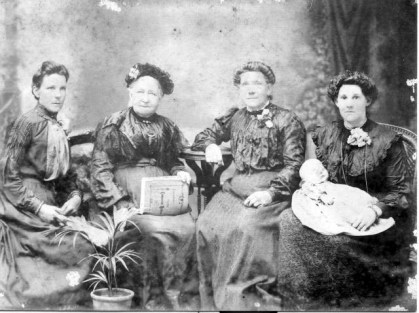
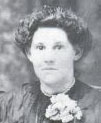
Their first child John Henry Kyling was born in October 1905 and John and Florence married the following month. This photograph from the christening was published in the Queenslander in March 1906 and shows five generations: Elizabeth Carseldine (nee Payne) (middle left), Mary Alsop (nee Kendrick) (middle right), Alice Osborne (nee Payne) (left), Florence Kyling (nee Webster) (right), and baby John Henry Kyling.

In 1908, at the age of three, John Henry died of measles and bronchopneumonia and was buried at Toowong. On the death certificate, John was listed as a wharf worker and the couple were living at Warren Street, Fortitude Valley. Two girls followed, Marie Alice Caroline (my grandmother) in 1909 and Mervis Florence Irene (pronounced Mavis) in 1911.

In the 1913 electoral roll John and Florence were living at Stanley and Peel Street, Brisbane South, and John was working as a salesman. In June the same year the final child was born, but something was wrong. He was registered as Charles Allen Arthur Kyling with no father listed. In fact, the certificate has the word ‘illegitimate’ written across under the father’s details section. Florence was 24 years of age and living at ‘Stephens Street West End’ (South Brisbane). I cannot find what happened to this child, and I assume he was adopted. I wonder whether he might have tried to find his mother later on, as someone has written in pencil ‘D. 1951’ next to her name on the original birth certificate.

In 1917 Florence’s remaining brother, George Arthur Webster, was killed in Begium fighting with the 9th Battalion, leaving his widow Augusta Elizabeth Madeline (nee Hoffman) and four young children.

In 1919 John had commenced working as a coach painter and was living at Melville Terrace, Wynnum with a woman named Anna Kruger. In 1925 and all the way through to John’s death in 1947 Anna appears as Annie Kyling in the electoral rolls. As the informant on John’s death certificate, she appears as ‘Annie Kruger, no relation’.

Florence appeared in the electoral roll in 1925 at Kingsley Terrace, Wynnum, then not again until 1949 when she was at Eventide Home.

In the intervening 24 years Florence, was homeless, and is noted in newspaper reports as having camped at Victoria Park and Anzac Park, Toowong, and occasionally sleeping in vacant houses. She went before the court on at least 26 occasions under her maiden name, usually receiving a short sentence of less than six months. Charges were mostly for theft, trespass and vagrancy, and one charge of unlawful assault when she was confronted by an angry house occupant in 1933. She carried out her offending in areas such Spring Hill, Brisbane, Kedron, Fortitude Valley. It would be safe to say that she committed many more crimes than those she was charged with, as from the timing of the court visits that she would reoffend almost immediately upon release from gaol, and sometimes when her ‘camp’ was searched she would be found with other items obviously stolen.

She would take anything she could lay her hands on, hiding as many small as items as she could inside her clothing. Cash, watches, silverware, jewellery, bicycles, all of which (unless she was caught with them) would be sold to her cohorts or pawned for money to buy food and alcohol. Her modus operandi was to enter houses alone during the day when either the occupants were out or when occupants were at the rear of the house, and enter through a window or unlocked door. At one stage she engaged in a door knocking campaign to beg for money and entering those houses where she received no response to her knock.

Senior Constable D. McGrath of the City Police Court, acted as prosecutor for at least a dozen of Florences court appearances. He had an extensive record of presenting such cases in court, and there were many, many petty criminals he saw time and time again. Florence always pled guilty, so he usually only had to present the details to the judge who would pass usually a moderate or light sentence depending on the circumstances.

On the rare occasion where there was a quote from Florence she was appealing to the judge that she was hungry and needed money to buy food. Mention was made of her and her homeless cohorts consumption of methylated spirits. In 1946 at age 60 when she was picked up on her final vagrancy charge, for which she received a sentence of two months’ gaol, she was described as having been sheltering in a tennis court shed in Anzac Park, Toowong, and in a filthy condition.

After a short stay at Eventide Home in where she resided from 1949, she was admitted to Brisbane Mental Hospital, Goodna on 12 March 1951 and died there on 20 August from cerebral thrombosis.

Mervis was the informant on her mother’s death certificate. Under children she lists Marie Alice Caroline 42 years, Mervis Florence Irene 40 years, I male deceased. There is no mention of Charles Allen Arthur Kyling.

Shipmates and Cohorts

Shipmates and Cohorts

Some snippets of information about the brief time John Worthington (Fortune, 1806) spent in the colony of New South Wales 1806-1814.

bwwaratah


Attempted Escape

On Tuesday last a Bench of Magistrates was convened; before whom were brought Isaac Peyton, John McDonald, and several others, who stood charged by Benjamin Peat with contriving a plot to seize and take away a Hawkesbury boat the joint property of McDonald (one of the prisoners) and himself. In consequence of the witness having prudently given information to a King's boat of their design, which he considered manifest from the appearance of the mail boat in pursuit of him when going out, the pursuers were in turn pursued, and cheated a precipitate retreat; - which was by no means a proof of the equity of their intentions. A Frenchman who was recognized by the witness in the boat was shortly after apprehended, and he 'with the true French nonchalance' brought a Dutchman into the same predicament, and several Englishmen followed among whom was Peyton, whose wife being likewise implicated in the charge of intended escape, was also apprehended. In the course of the search about the small bays, creeks, and inlets, a considerable stock of provisions was found, which the two foreigners declared to have been purposely deposited there for their use of the voyage to some of the Asiatic settlements. The whole of this as well as a quantity of wearing apparel and other property, was claimed by Peyton ; who urged that his motive for removing it rather was a wish he had entertained of taking up his residence in that part of the country, where secluded from the eve of inquiry, he had designed to open a small distillery; - but a mariner's compass, quadrant, and Epitome, rather militated against the candour or the acknowledgement. Other persons, who had before eluded suspicion were now implicated by their companions, Dutch, French, and English, and all the parties committed for further examination.
(Sydney Gazette, 28 June 1807, p.1)
Isaac Peyton, Hugh McDonald, William Welch, and Susannah Harris were indicted for seducing from their duty the several prisoners hereafter mentioned, by contriving their escape from this colony in a vessel named the Argument whereof Hugh McDonald was a part owner; and Dennis Maloy, John Wetherington [Worthington], George Boyden, Jas. Darbyshire, and James Hargraves were likewise indicted for attempting their escape from this their lawful place of confinement, by consenting to the plan of the above, and assisting to carry them into execution.
Three persons who had likewise engaged in the plot being accepted as evidences for the Crown; viz. Brian Overhand, Francois Francisco, a Frenchman, John Simmons, a Dutchman, they gave evidence accordingly, which added to that of Peat was conclusive and incontrovertible. The principals rested their defence on a positive denial of the facts; but the accessories declared the charge to be just, and by an acknowledgement of their design in this last stage of the trial, threw themselves on the mercy of the Court; which cleared, and re-opening all but Susannah Harris were found guilty, and sentenced McDonald, Peyton, and Welch to pay a fine of £50 to the King, to be imprisoned 12 months; and to remain in gaol until the fine be paid :—The others to receive 300 lashes each.

The testimony of this case is documented at the Macquarie University website. Of the cohorts, John Worthington, Bryan Overand, James Hargraves and James Darbyshire all had travelled to Australia aboard the Fortune. All four admitted they intended to leave the colony, and received 300 lashes.

Who among the convicts was most likely to try to escape? There were occasional cases where the escapees were people who had been in the colony for some years, and who even had families and property. But escapees were most often from among the latest arrivals, those for whom the colony was strangest and most disorienting, and the urge to return strongest. In the earliest years they seemed to fear most of all the idea of unrelenting labour and slave-like existence, whether or not they actually experienced such conditions.
(Grace Karskens, '''This spirit of emigration'': the nature and meanings of escape in early New South Wales', Journal of Australian Colonial History, Vol. 7, 2005, p. 8)

In this case, they certainly were a mixed bunch. Karskens refers to Peyton and Harris as from the former group, having a large house, children and Peyton’s established stonemason business, and she says financial difficulties may have influenced his decision to leave. But Worthington and his Fortune shipmates, having arrived in August the previous year and having served only eight months of their sentences, were relatively unencumbered.

Surprise Release

Three years later John Worthington and James Hargreaves found themselves on the receiving end of an act of kindness by the incoming Governor Macquarie:

GOVERNMENT and GENERAL ORDERS.
Government House, Sydney,
Friday, 5th January, 1810.
HIS EXCELLENCY the Governor, as an Act of Grace and Favour on the Occasion of his taking Charge of the Government of this Territory, has thought proper to direct that the undermentioned Persons now confined in the Gaol of Sydney shall be released and set at Liberty this Afternoon: namely, James Hargrave, John Worthington, William Henry, James Hardwicke, Thomas Jones, James Stoneham, John Draper, Ralph Summers, James Smith, Thomas Hayes, George Dunstan, Garret Armstrong, John Anson, Lawrence Parory, and Hadji (a black man). The Governor trusts this Act of Clemency will have the desired effect on the minds of those men now released from Confinement, and that it will stimulate them to be more orderly, and better Members of Society for the future. By Command of His Excellency,
I. T. CAMPBELL, Sec.
(Sydney Gazette, 7 Jan 1810, p.2)

Macquarie was the last autocratic Governor of New South Wales and he would hold the post for 11 years. He took the reins after the chaos and tension of the previous Governor Bligh regime. There were controversial aspects to Macquarie’s leadership (as there were for all the previous governors), but as far as convict relations were concerned, he was a liberal.

In a developing society harbouring a divide between free settlers and convicts, Macquarie used the carrot rather than the stick – treating emancipated convicts relatively well, entrusting them with positions of authority, and providing plenty of work through infrastructure building. That Macquarie had landed at Sydney Cove on 31 December 1809 and had the above noticed published so quickly could be seen as a small olive branch to set the tone for a new chapter of administrator-convict relations.

Trouble Again

For all of Macquarie’s good intentions, John Worthington wound up before the judiciary again less than six months later, accompanied by two further shipmates from the Fortune, Isaac Hogg and Samuel West. While not a significant case in its own right, it’s significant to tracing John Worthington’s history in the colony, as there are so few records of him . Three chickens had been stolen on Saturday, 16 June 1810 from John Palmer at Woolloomooloo, and these were found having been killed and put in the yard at Worthington’s residence. In the courtroom, the three deceased chickens were presented for identification as those belonging to Palmer. Testimony was provided by William Yarls, a servant of Palmer (who had reared the fowls and discovered they were missing), John Redmond (who searched Worthington’s residence and found the fowls), Enoch Kinsela (publican and Fortune convict), John Robinson (butcher, neighbour of Kinsela, Palmer employee and Fortune convict).

Place Note: Woolloomooloo Farm, Sydney

After the First Fleet’s arrival in Sydney, the area was initially called Garden Cove or Garden Island Cove after the nearby small wooded Garden Island, off the shore. The first land grant was given to John Palmer in 1793 to allow him to run cattle for the fledgeling colony. In the 1840s the farm land was subdivided into what is now Woolloomooloo, Darlinghurst and parts of Surry Hills. Wikipedia Swampy land that was regularly flooded did not make it especially attractive to early settlers. But it was fertile, and after the colony’s commissary-general, John Palmer, was granted land here in 1793, he built a house and made a good fist of farming. The native melaleucas and casuarinas were replaced with fruit trees and he even experimented with growing tobacco. The success of his endeavours resulted in the valley becoming known as The Farm. Dictionary of Sydney

West (also a Fotune shipmate) had been an employee of Palmer and was seen in Palmer’s yard on the night of the crime, but he denied involvement. Hogg had been an employee of neighbour Enoch Kinsela, who had allowed him to stay there, and in the time Hogg had been there other birds had gone missing from Palmer’s. Blood and feathers had been found in the pocket of the jacket Hogg was wearing and he confessed.   Worthington denied involvement, saying that he merely gave accommodation to his shipmate on the evening of the robbery. The court found Worthington and Hogg guilty, sentencing them both to twelve months’ hard labour. West was directed to sleep at the gaol until further orders.

The Lumber Yard

Worthington is shown in the muster of 1811 as a carpenter in the government lumber yard. The lumber yard was not far away from Palmer’s farm, Sydney Gaol and the Male Orphan Institution where his children would later reside.

Worthington’s time in the colony preceded the construction of Hyde Barracks, and prisoners lived in individual (presumably very basic) places of residence.

The Last Official Record : Settling a Debt

Thomas Rose of Sydney, dealer ... Plaintiff

and

John Worthington of Sydney ... Defendant

Writ for sixteen pounds sterling on a promissory note dated 5th January 1814 drawn by defendant payable to bearer on a day now past.

Upon the defendant's voluntary confession and consent, the court gives judgement for the plaintiff.

Damages £12.0.0 Costs £3.15.4. Execution to pursuant to the confession.

Thomas Rose was a baker operating in Chapel Row (later renamed Castlereagh Street) and he later dealt in imported goods. An advertisement in the Sydney Gazette in 1815 shows him offering imported linen, clothing, footwear, copper tea kettles, tools, haberdashery items.

Murder at Epping

Murder at Epping

bwcommonheath Catherine Maher (nee Costigan) (my gg grandmother) was a witness to a murder that occurred at Epping in 1858. An inquest was not held until February 1864, after the victim’s body was discovered. Catherine, by then married and living at Lancefield, testified at the inquest.

The scene of the murder was the Traveller’s Rest Hotel, Epping. The proprietors of the hotel were Patrick and Sarah Burke, the accused was Patrick’s brother, Batholomew (‘Bartley’) Burke who was alleged to have murdered his wife Mary. Bartholomew, a labourer, and Mary had three young children and resided in a tent next to the hotel. In 1858 Catherine Costigan was a servant for John and Margaret Maher. John was a wheelwright who rented a house and paddock from Patrick Burke for his family and business. The house was next to the hotel and close to the tent.

In 1858 Mary disappeared and Bartley Burke had told everyone that he had paid her passage to Sydney. He continued to live in the tent for several weeks and, after leaving the children in the care of friends and relatives he moved on himself.

In February 1864 a detective named Williams, acting upon information he’d received, found the remains of Mary Burke on the former site of the tent. Patrick Burke and his son Martin were charged with being accessories and an inquest into the death was held at Northcote later that month. Catherine’s testimony concerned her having heard and seen what may have been the fatal shooting.

The Leader, 20 Feb 1864, p.6

THE EPPING MURDER.

Catherine Maher, a married woman, residing at Lancefield, deposed: I recollect residing with John Maher, at Epping, about five years ago, as a servant. He rented the piece of land his house was then on from Patrick Burke, the landlord of the Travellers’ Home Hotel. The house might be about thirty yards from the hotel, and was on the same side of the road. I knew Bartley Burke and his wife, as they lived in a tent just outside the back corner of Mr Maher’s house. The tent could be seen quite clearly from the house. One night, after ten o’clock, I heard the report of firearms in the direction of Burke’s tent, whilst I was going out of the back door of the house. The night was dark. I distinctly saw the flash of the gun. The report I heard almost simultaneous with it. There was no one with me at the back door at the time, Mr and Mrs Maher being in the house, but in a minute or so afterwards, as I was turning to go into the house, the latter came out beside me. When I went inside they both asked me where the shot had been fired, and I replied about Burke’s tent. Previous to that night I was constantly in the habit of seeing Mary Burke about the tent, but never saw her afterwards. Burke remained at the tent between six and seven weeks afterwards. On the next, morning after the shot was fired, Patrick Burke, the hotelkeeper and his wife went away in their gig towards Melbourne. Could not tell what particular dress Mary Burke wore or the color of her hair. On one occasion saw, her beaten by her husband. She seemed at that time to be, a little groggy. About a minute before the report of the gun I heard a person near the tent exclaim ‘look out.” I heard no screaming, however, either before or after the report. The tent contained no separate apartments. The chimney attached to it was built of stone. On the morning after the shot, the second child came to me and said that her father told her he had sent her mother off to Sydney. There were three children the, eldest I think was about eight years of age. I had no conversation with them afterwards upon the subject. To Inspector Bookey : I had no conversation with Mrs Patrick Burke about what evidence I was to give. To, the Jury : I never saw, Bartley Burke with firearms in his hands. The day after the shot was fired was not a Sunday, The tent remained up about a month after that.

John and Margaret Maher also gave evidence at the inquest …

John Maher, a wheelwright, residing : at Epping, deposed: I rented a paddock and house near Patrick Burke’s hotel, from 1855 till some time in 1862. I recollected Bartley Burke and his wife, living near my place in a tent. I often saw the latter, but did not know her Christian name. On one occasion, late at night, I heard a shot fired near their tent, as I was in bed. I did not make any inquiries at the time or afterwards regarding the shot ; it had become impressed in my memory from the fact that it was rather a late hour to go opossum shooting. I never saw Mary Burke afterwards, but I saw her husband frequently. He remained about the place for some weeks, but how many I do not exactly remember. Some days previous to the shot being fired, Burke and his wife had a quarrel at my place. Burke struck her with a stick of some kind, upon which I separated them, putting him out of the house. Where the blow was struck I cannot tell, it is too long since then.. Burke’s tent was situated about the place where the bones were found. I have not seen him within the last three years. I frequently saw him with a gun, but of what description I cannot remember.

Margaret Maher, wife of the preceding witness, deposed: I recollect living near Patrick Burke’s hotel, about six years ago and remember a tent nearby occupied by Bartholomew Burke and his wife. One night, about ten o’clock, I heard the report of a gun, near the tent, the night was dark and I saw the flash of the gun very distinctly. I remember the shot, because it was so near the tent. I was in the habit of seeing Mrs Burke almost daily, but I did not see her for two days before the shot was fired. Never saw her afterwards. I had some conversation with the second youngest child on the morning afterwards, I asked the child if her mother was at home, when she replied that her father had sent her to Sydney that morning. Mrs Burke left the place before, but she then called in and bade me good bye. On one occasion she had a few words in my place with her husband, who struck her with a stick. She was then a little groggy, but he seemed quite sober. Heard, no words near the tent before or after the report of the gun. There was no light in the tent at the time. It remained standing for two or three weeks afterwards. I saw Burke between eight and nine o’clock on the morning after the shot was fired, going from his own tent to the public-house. I afterwards saw him return to the tent. Patrick Burke and his wife had left in their gig for Melbourne, before that. Mary Burke’s hair was either brown or black, and very long, but whether it was ever plaited or not I could not tell.

After several days of evidence from about ten witnesses, a jury verdict was delivered …

The jury, without retiring, unanimously agreed upon the following verdict :— “That, on or about the 19th of September, 1858, at Woolert, Mary Burke died from violence, inflicted upon her by her husband Bartholomew Burke. We find the said Bartholomew Burke guilty of the wilful murder of the said Mary Burke.”

After the inquest the search was on for Bartley Burke …

Geelong Advertiser, 29 February 1864, p.2

A reward of one hundred pounds is offered in Friday night’s Gazette, for the apprehension and conviction of Bartholomew Burke, charged with the wilful murder of his wife, Mary Burke, on or about the 9th September, 1853 The following is given as the description of the man Bartholomew Burke—Irish, aged about 43, 5 feet 7 or 8 inches high, medium build, dark complexion, hair, whisker and moustache, probably now turning grey; formerly a soldier in H.M. 40th regiment at Melbourne, acting as officers’ servant, discharged in 1857. He afterwards lived with his wife at Gisborne or Kyneton. About 1860 he worked at Kew for two contractors, named respectively Morgan and Sobie, being then known by the name of Moore. In 1849 (? 1S59) he worked at Gardiner and Cheltenham under two contractors, named respectively Dwyer and Malone, at the time when one George Oldham was murdered there by one Regain About two years ago he was at work stone breaking near the Plough Inn, Plenty-road. His general appearance is that of a labourer. During his military service he was for some time employed on escort duty.

Kyneton Observer, 29 March 1864, p.2

Considerable difficulty seems to be experienced in coming, across the whereabouts of the missing Bartholomew Burke, the supposed Epping murderer. Scarcely a day passes but some one is apprehended who is fancied to answer the description, and, as a matter of course, shortly after discharged ~ but it seems hard that this should be the law, as many innocent persons may thereby have their characters materially damaged.

He was found in December 1864 in Tasmania, and further charged with absconding …

Mercury (Hobart), 19 December 1864, p.2
ABSCONDING – John Burke alias Bartholomew Burke alias Moore, charged upon his own confession with a murder committed in Victoria, was discharged, a further charge of absconding in June 1851, was preferred against him and he was remanded for examination to the 22nd inst.
The inquest was widely reported on and these reports can be found on the Trove Newspapers website.