Displaced Relics of Henry Kyling

Displaced Relics of Henry Kyling

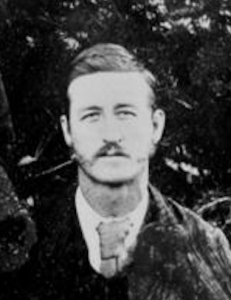
Christian William Harry Kyling (known as Henry) was a brother to my great-grandfather John William Kyling. This article records Henry’s short life and a couple of relics that have appeared after having been lost to the family.

Henry’s Life

Henry was born on 7 September 1866 at Allora near Warwick. His German-migrant parents Fred and Caroline Kyling were living there at that time where Fred worked as a carpenter. By the time of his christening on 11 May the following year the family had moved to Warwick township where Fred would work a while longer as a carpenter before taking on the licence of the European hotel. Henry was the third child of the family of 10 children (12 if you include the two girls from Caroline’s first marriage). He was 20 years of age when his father Fred passed away, and his mother would soon thereafter suffer insolvency and depression that would see her sent to Willowburn, Toowoomba in 1892.

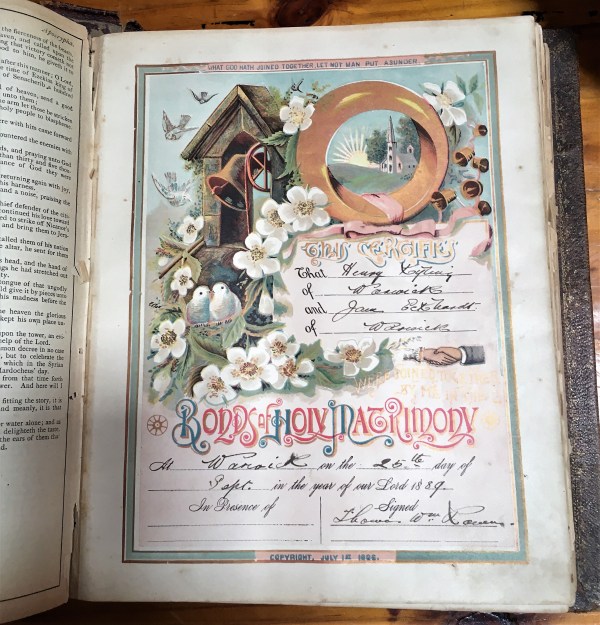
At the age of 29 Henry married Jane Eckhardt on 25 September 1889. The wedding occurred at the Eckhardt family home at Sandy Creek. Consent for Jane, who was aged 19, to marry was given by her father George August Eckhardt. At the time of the marriage, Henry was working as a labourer and residing at Warwick.

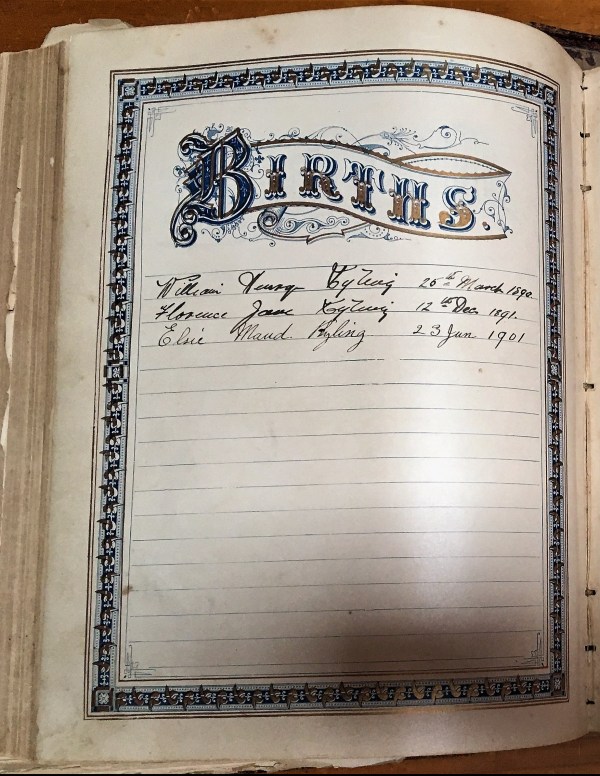
Henry and Jane had three children: William Henry (b. 25 Mar 1890), Florence Jane (b. 8 Dec 1891) and Elsie Maud (b. 23 June 1901).

Soon after Elsie’s birth Henry took on a new work role:

WARWICK, December 21
CEMETERY TRUSTEES
A meeting of the trustees of the Warwick Cemetery was hold in the Town Hall yesterday afternoon for the purpose of appointing a sexton. For the position, which is worth, all told, £100 a year and a free house, there were eight applicants, and it was unanimously decided to accept that of Henry Kyling.
(Brisbane Courier, 25 Dec 1901, p. 6)

The 1903 electoral roll shows the family residing at the Cemetery:

He was an amateur runner, and participated in a number of local events including the Grand Handicap at Warwick on Queen’s Birthday weekend in 1888.

Henry was also a musician – an accordion player and is noted in the Warwick newspapers as playing at various local functions such as:

In 1890 at a social gathering for the Warwick Rugby Football Union: 'The music, provided by means of a piano, violin, and accordion, was quite up to the required standard of excellence. Mr. Harry Kyling handled the latter, while Mr. Sedgwick, and Mr. Jensen occasionally relieved on tho piano and violin.' 
(Warwick Examiner and Times, 11 Oct 1890, p.2)
In 1901 at a social dance at the Oddfellows' Lodge: Capital dance music was supplied by Mr. "Harry" Kyling and the Misses Ethel Sellars, A. Locke, and Noyes (piano). 
(Warwick Examiner and Times, 20 Apr 1901, p.2)
In 1901 at another social dance to celebrate the centenary of the Oddfellows' Lodge: 'The ball was brilliantly lighted with gas, and decorated beautifully with evergreens and a display of bunting. Mr Harry Kyling supplied music in his usual perfect style with an accordion, being occasionally relieved by Mr. Sedgwick at the piano.' 
(Warwick Examiner and Times, 13 Sep 1890, p.2)

Henry’s Death

Obituary. Mr Henry Kyling, sexton at the Warwick cemetery, died at his residence on Saturday evening last. The sad event was not unexpected, as the deceased had been laid up for some time with an affection of the heart. He was obliged to take to his bed six weeks ago, and for the last month paralysis deprived him of the power of speech. The late Mr Kyling, who was 38 years of age, leaves a widow and three children. The funeral took place on Monday, the service at the grave being conducted by the Rev. T.L.H. Jenkyn.
(Warwick Examiner and Times, 22 Jun 1904, p.3)

The death certificate notes aortic valvular disease, dyspnea (breathlessness), paralysis and asthenia (abnormal physical weakness or lack of energy) and that he had these health issues for some years. The informant on the death certificate was Jane’s sister ‘Mrs G. Bell’ (Elizabeth nee Eckhardt) and George Bell is one of the listed witnesses to the burial that occurred at Warwick Cemetery on 20 June 1904. The children were aged 14, 12 and 3.
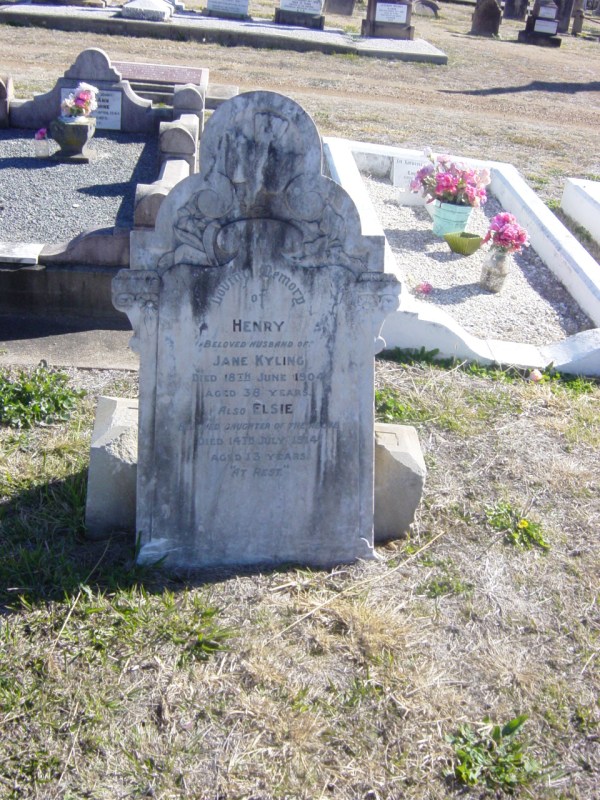
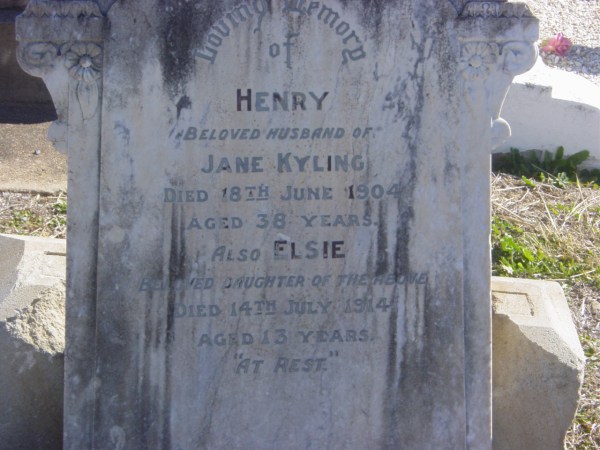
Two days after the burial Mr A. Clark was appointed as the new sexton of Warwick cemetery, and Jane and the children moved to William Street, Warwick.

Two years later Henry’s mother Caroline passed away at Toowoomba and was brought back to Warwick for burial with Fred. In 1910 all of Henry’s siblings gave their signed consent for assets to be sold so that Jane would be able to provide for her dependent children from what would have been Henry’s share of the proceeds.

In 1910 Florence married Vincent Cody, and Jane moved to Paddington (Brisbane) and William worked as a baker there.

OBITUARY.
The death took place in Brisbane on Tuesday night of Miss Elsie Kyling, who was only thirteen years of age at the time of her decease, which was due to heart failure. A daughter of the late Mr. H. Kyling who passed away about seven years ago, the deceased girl had been a resident of Warwick until a short time back. Her brother (Mr H. Kyling) and her sister (Mrs J. Cody) both live in Warwick, and to them sympathy is extended. The body was brought to Warwick on Thursday, and the funeral, which was well attended, then took place to the Warwick cemetery.
(Warwick Examiner and Times, 18 Jul 1914, p.3)

Elsie had suffered a severe bout of gastritis resulting in convulsions and heart failure. Her brother William Henry Kyling was the informant on the death certificate. She was buried with Henry and her name can be seen on the headstone above.

Soon after Elsie’s death William Kyling seems to have enlisted as a merchant seaman in the First World War. Though I haven’t been able to locate his enlistment papers, the National Archives in London holds a medal card for him:
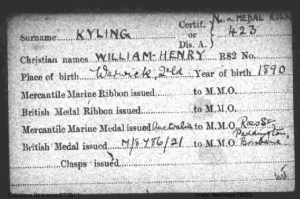
and the National Archives of Australia holds an application for his war medals by William’s wife in 1951.
Applicant – KYLING Bertha Blanche [widow of William Henry Kyling] : Born – 1890 : Place of Birth – Warwick : Application for – Campaign Stars and War Medal : Date of Application – 9 February 1951.

He seems to have had an interesting life – along with his military contribution he travelled and worked in Melbourne and Sydney before his marriage to Bertha Blanche Bright in 1925. They appear not to have had any offspring. William died in 1946 in Sydney and he and Bertha are buried at the Eastern Suburbs Memorial Park.

KYLING.—June 30, 1946, at his residence, 5 Bobmos Flats, 151 Todman Avenue, Kensington, William Henry Kyling, dearly beloved husband of Bertha Blanche Kyling, age 56 years. Privately interred on July 1, 1946.
(Sydney Morning Herald, 2 Jul 1946, p.14)

Jane had passed away five years earlier in Brisbane:

KYLING.— The Relatives and Friends of the late Mrs Jane Kyling, of 28 Latrobe Terrace, Paddington, are Invited to attend her Funeral, to move from Alex. Gow's Funeral Chapel. Petrie Bight, this (Friday) afternoon, at 3.30 o'clock. for the Toowong Cemetery.
(Courier-Mail, 10 Oct 1941, p.10)

Florence and Vincent Cody had four children. Florence died in Brisbane in 1975, and she and Vincent are also buried at Toowong.

The Relics

Back in 2006 I typed ‘kyling’ into the then Picture Australia database and found a copy of the funeral cards of both Henry and his mother. They had made their way into the John Oxley Library collection at the State Library of Queensland.
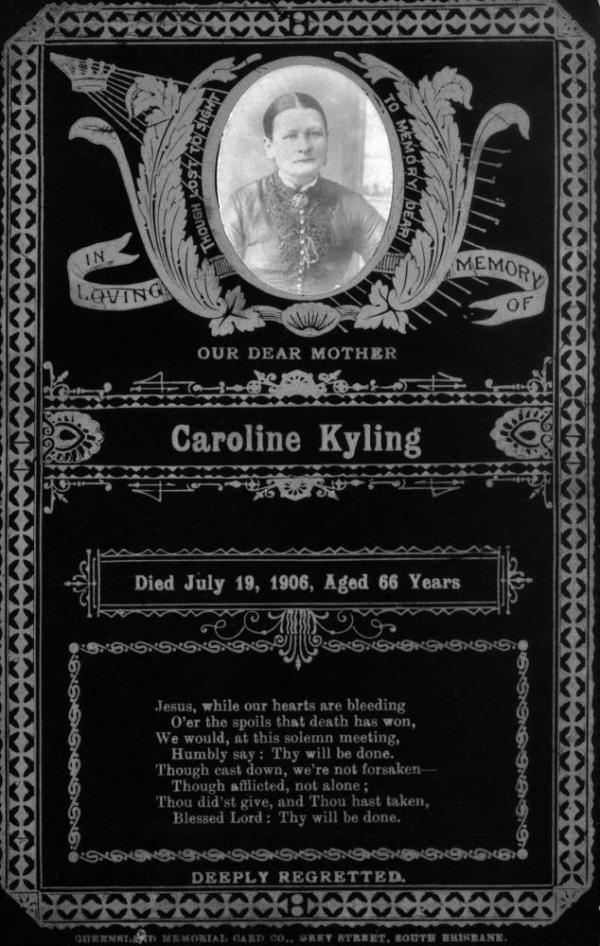
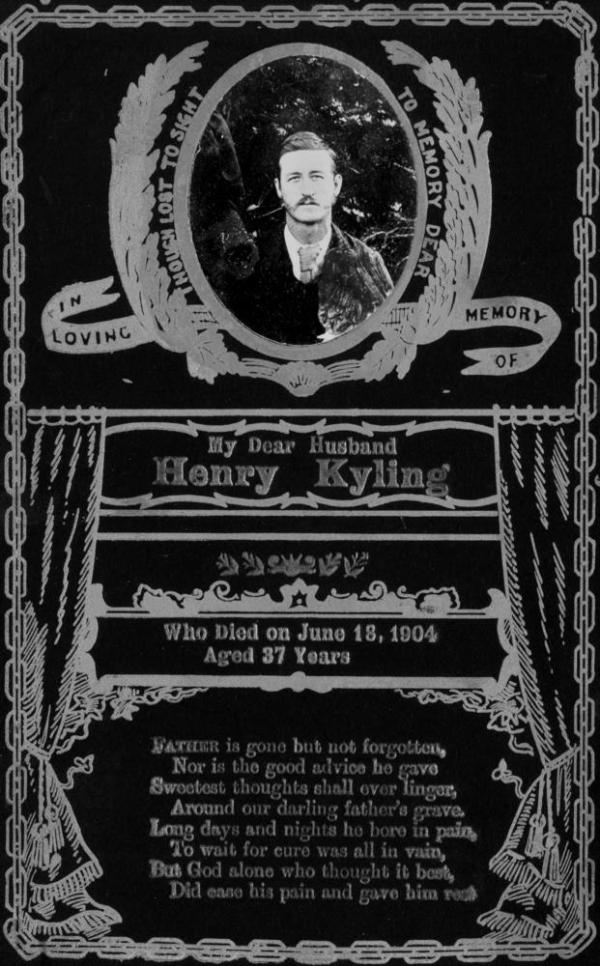
I wrote to the John Oxley library and asked if there was any providence information for them. The reply from the library was:

Unfortunately, there is no record of the source of these photographs in the past, a great number of items in the collection seem to have been accumulated with very little information provided by the donors. l’m so sorry we are unable to help you with this.

Regardless of how these items made it into the library I’m so glad they did; if they had not, the only known images of these two might have been forever lost. The text around Henry’s picture reads ‘Though lost to sight … to memory dear’. In fact the opposite is now true – though there is now no living person with a dear memory of Henry, this photo means he is not lost to sight.

The Picture Australia database was later absorbed into Trove and the here are the links to these items for Caroline and Henry.


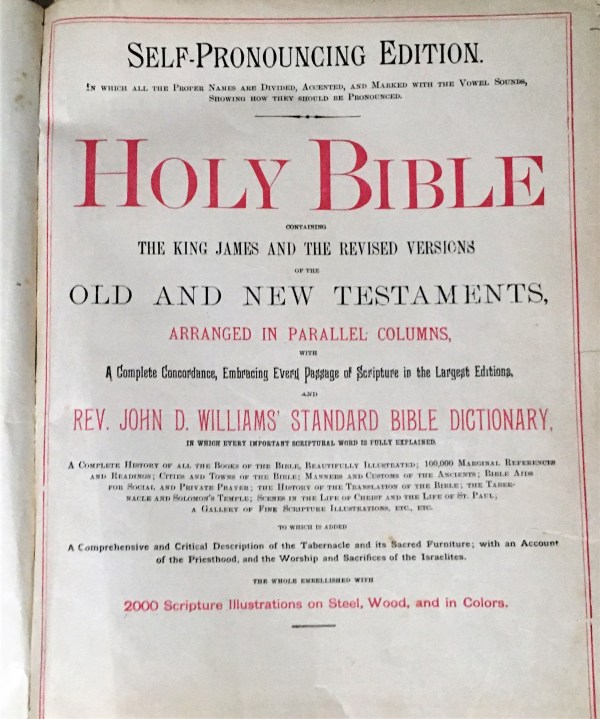
In May 2021 I was contacted out of the blue by a person who 30 years ago had purchased an old bible from a collectibles shop in Queensland in a state of disrepair. She recently inspected it again, noticing the inscriptions and very generously sent me some photos of it.

It was the bible presented to Henry and Jane on their wedding day at Sandy Creek on 25 September 1889!
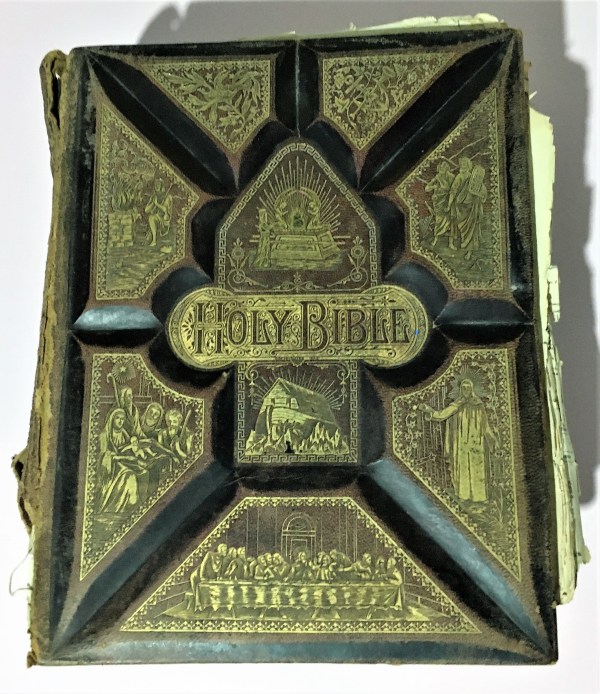
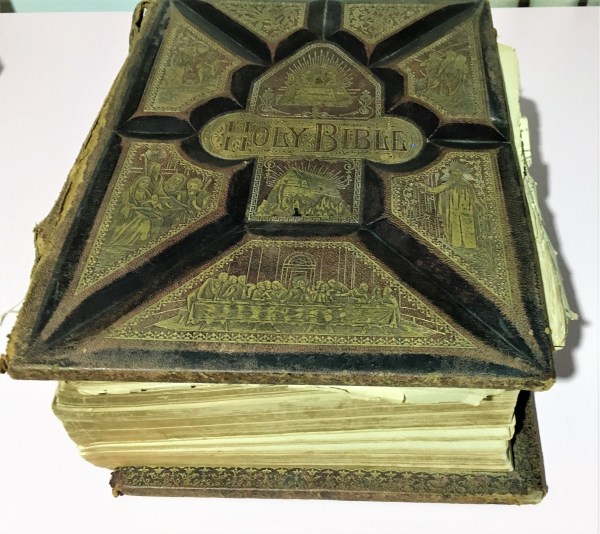
bible-7
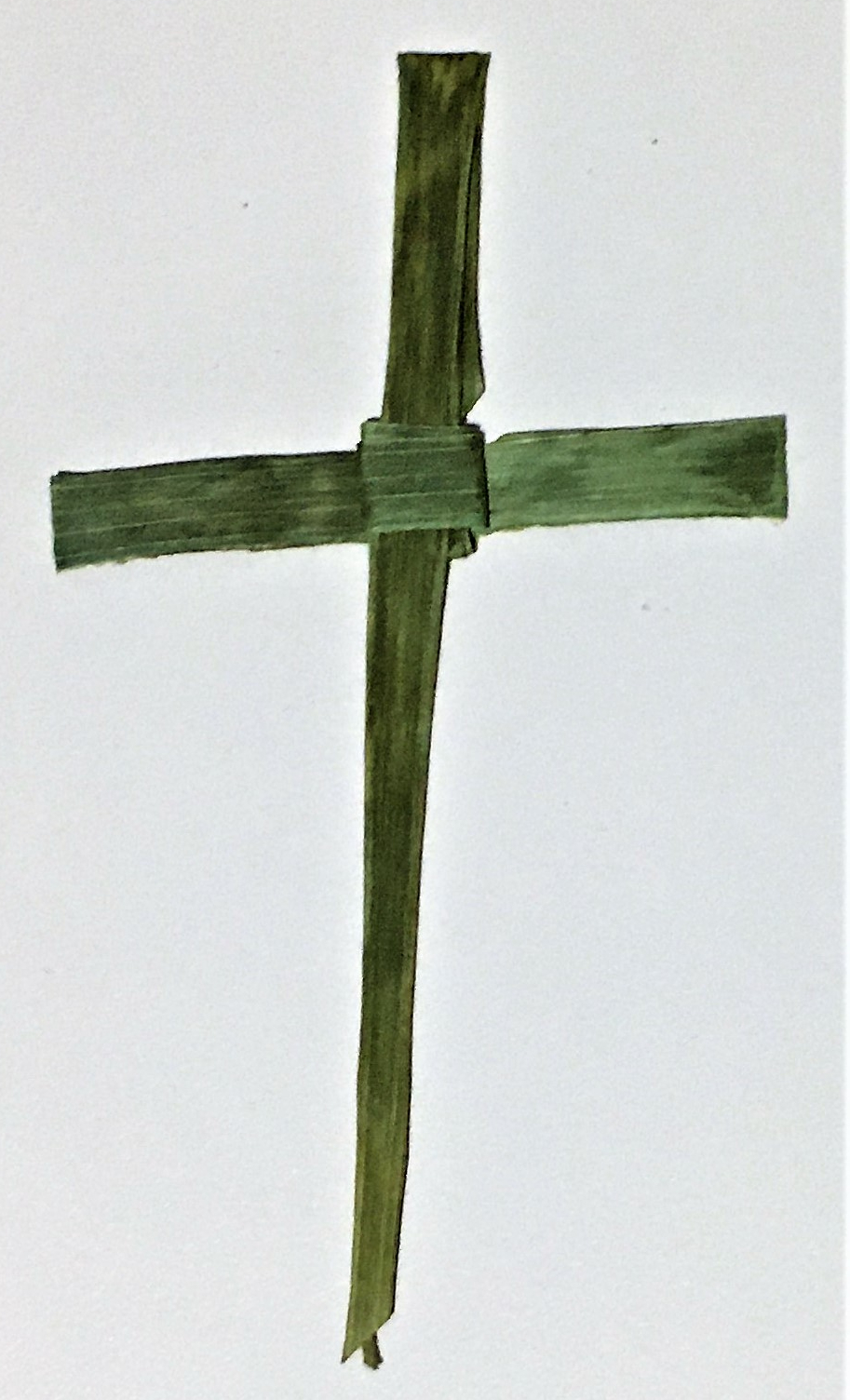
Inside is a bookmark, fashioned from piece of long grass or reed and pressed in the shape of a cross.

If you have ever found a family relic and sought a family member to send or provide a copy to – then thank you.
You may have added something significant to the story of a person’s life!

What Happened to Florence?

What Happened to Florence?

Many hardworking, law-abiding ancestors have lived their lives leaving behind a sparse and unremarkable trail of records, and often no images. My great-grandmother Florence Rosaleigh Mary Webster was not one of these people. The details of her early life are a little hazy, but her descent into vagrancy, alcoholism and petty crime kept Brisbane law enforcement and court reporters occupied for over two decades.


Florence’s life began near Caboolture, Queensland in an area ironically called Downfall Creek. Now a part of Chermside West, it was possibly named in 1843 by missionary and farmer Carl Friedrich Gerler (1817-1894) when a bullock dray broke down there while establishing a mission outstation at Caboolture.

Her father, George Thomas Webster, had been born in Maldon, Victoria, where his father Joseph searched for gold. Joseph and Elizabeth Webster moved their family to Queensland in around 1867 and farmed at Downfall Creek and later at Kilcoy. The year 1867 coincides with reports of gold having been discovered in the area, so no doubt he Joseph Webster made some efforts in that regard as well.

On 16 May 1883 at the Methodist Church in Ann Street, Brisbane, George married 16-year-old Alice Jane Payne. Alice was born in Birtsmorten, Worcestershire, and had migrated to Australia with her parents at the age of 10. At the time of the marriage, George was a 22-year-old labourer of Downfall Creek, and Alice was a resident of South Brisbane, so how the two became acquainted is unknown.

George and Alice’s firstborn was a boy named William Joseph, born on 18 June 1884, but he died only 40 days later on 28 July, and was buried at Lutwyche Cemetery. Next came George ‘Victor’, born 1885, then Florence Rosaleigh Mary in 1886, then George Arthur in 1889.

A little boy, aged three years, named Victor Webster, was drowned in a well on Tuesday at Downfall Creek. The lad was on a visit to his aunt, and between 11 and 12 o’clock he was missed. His aunt called him, but getting no answer she went outside and looked down the well in the back yard. There she saw bubbles coming to the surface, shortly followed by the boy’s head. She immediately ran to where her father was working, a distance of about one mile. When he arrived he took the body out of the well. The well was roughly covered by a few slabs. An enquiry will be held.The Week (Brisbane, Qld.), 2 Nov 1889, p. 11.

The aunt was Ada, she was 13 years of age at the time, her mother Elizabeth was visiting Sandgate, and before she left she had instructed Ada to ‘take care of the children’ (how many she was taking care of is not mentioned any of the reports). Nor do any reports mention George Snr or Alice, but one can only imagine the loss of this boy to be devastating for all concerned. Florence was three years old at the time and Alice was weeks away from giving birth to George Arthur. The inquest ruling was accidental death and Victor was buried at Lutwyche Cemetery with his brother.

What became of Florence’s father after this time is uncertain. Some Ancestry family trees have him passing away at the Dunwich Asylum in 1920, though there doesn’t seem to be any evidence for this. He seems to have disappeared by the late 1890s. Alice had two further daughters Edith Payne Osborne (1897) and Laura Osborne (1901), and would later wed their father, William George Osborne in 1908. On that marriage certificate Alice declared she was a widow living at Charlotte Street, Brisbane.

By this time Florence had met and married John William Kyling, a labourer from Warwick in the Darling Downs region, where his German immigrant parents were hotel keepers.

Their first child John Henry Kyling was born in October 1905 and John and Florence married the following month. This photograph from the christening was published in the Queenslander in March 1906 and shows five generations: Elizabeth Carseldine (nee Payne) (middle left), Mary Alsop (nee Kendrick) (middle right), Alice Osborne (nee Payne) (left), Florence Kyling (nee Webster) (right), and baby John Henry Kyling.

In 1908, at the age of three, John Henry died of measles and bronchopneumonia and was buried at Toowong. On the death certificate, John was listed as a wharf worker and the couple were living at Warren Street, Fortitude Valley. Two girls followed, Marie Alice Caroline (my grandmother) in 1909 and Mervis Florence Irene (pronounced Mavis) in 1911.

In the 1913 electoral roll John and Florence were living at Stanley and Peel Street, Brisbane South, and John was working as a salesman. In June the same year the final child was born, but something was wrong. He was registered as Charles Allen Arthur Kyling with no father listed. In fact, the certificate has the word ‘illegitimate’ written across under the father’s details section. Florence was 24 years of age and living at ‘Stephens Street West End’ (South Brisbane). I cannot find what happened to this child, and I assume he was adopted. I wonder whether he might have tried to find his mother later on, as someone has written in pencil ‘D. 1951’ next to her name on the original birth certificate.

In 1917 Florence’s remaining brother, George Arthur Webster, was killed in Begium fighting with the 9th Battalion, leaving his widow Augusta Elizabeth Madeline (nee Hoffman) and four young children.

In 1919 John had commenced working as a coach painter and was living at Melville Terrace, Wynnum with a woman named Anna Kruger. In 1925 and all the way through to John’s death in 1947 Anna appears as Annie Kyling in the electoral rolls. As the informant on John’s death certificate, she appears as ‘Annie Kruger, no relation’.

Florence appeared in the electoral roll in 1925 at Kingsley Terrace, Wynnum, then not again until 1949 when she was at Eventide Home.

In the intervening 24 years Florence, was homeless, and is noted in newspaper reports as having camped at Victoria Park and Anzac Park, Toowong, and occasionally sleeping in vacant houses. She went before the court on at least 26 occasions under her maiden name, usually receiving a short sentence of less than six months. Charges were mostly for theft, trespass and vagrancy, and one charge of unlawful assault when she was confronted by an angry house occupant in 1933. She carried out her offending in areas such Spring Hill, Brisbane, Kedron, Fortitude Valley. It would be safe to say that she committed many more crimes than those she was charged with, as from the timing of the court visits that she would reoffend almost immediately upon release from gaol, and sometimes when her ‘camp’ was searched she would be found with other items obviously stolen.

She would take anything she could lay her hands on, hiding as many small as items as she could inside her clothing. Cash, watches, silverware, jewellery, bicycles, all of which (unless she was caught with them) would be sold to her cohorts or pawned for money to buy food and alcohol. Her modus operandi was to enter houses alone during the day when either the occupants were out or when occupants were at the rear of the house, and enter through a window or unlocked door. At one stage she engaged in a door knocking campaign to beg for money and entering those houses where she received no response to her knock.

Senior Constable D. McGrath of the City Police Court, acted as prosecutor for at least a dozen of Florences court appearances. He had an extensive record of presenting such cases in court, and there were many, many petty criminals he saw time and time again. Florence always pled guilty, so he usually only had to present the details to the judge who would pass usually a moderate or light sentence depending on the circumstances.

On the rare occasion where there was a quote from Florence she was appealing to the judge that she was hungry and needed money to buy food. Mention was made of her and her homeless cohorts consumption of methylated spirits. In 1946 at age 60 when she was picked up on her final vagrancy charge, for which she received a sentence of two months’ gaol, she was described as having been sheltering in a tennis court shed in Anzac Park, Toowong, and in a filthy condition.

After a short stay at Eventide Home in where she resided from 1949, she was admitted to Brisbane Mental Hospital, Goodna on 12 March 1951 and died there on 20 August from cerebral thrombosis.

Mervis was the informant on her mother’s death certificate. Under children she lists Marie Alice Caroline 42 years, Mervis Florence Irene 40 years, I male deceased. There is no mention of Charles Allen Arthur Kyling.

Germans to the Darling Downs in the 1850s

Germans to the Darling Downs in the 1850s

Here are some snippets about German bounty immigration to the Darling Downs region of Queensland, as background to the voyage and life of my gg-grandfather, Frederick Kyling who arrived at Moreton Bay aboard the Johan Caesar in 1856.

From German Immigration to the Toowoomba Area

The Darling Downs during the 1830s to 1860s was divided into large lease land holdings. These settlers had come out from England, with reserves of capital, and had come to the Darling Downs taking large tracts of land under lease. The rich grasslands of the Downs and the low lease rents gave rise to a rich pastoral aristocracy. They chose to graze rather than till the rich soil. Most of these holdings were self-sufficient in that they maintained tradesmen and workers on the station and as such relied very little on the services of the nearby towns of Toowoomba and Warwick.  This powerful squatter class held dominance over Queensland’s affairs. In the 1850s there was a labour shortage on the pastoral properties of the Darling Downs due to the pastoral workers vanishing to the gold fields. To counter this phenomenon, the squatter aristocracy used German agents to recruit German shepherd migrants. German immigration to Australia under contract occurred between 1852 and 1855. As the squatter’s properties were unfenced, a Shepherd’s job was to live in isolated areas of the property and protect a flock of sheep from dingoes, aboriginal hunters and generally keep the flock in the boundaries of the station. They proved to be reliable, frugal and sober workers who managed to save sufficient cash out of their wages of 20 to 30 pounds per year (and rations) to enable them to purchase land in the Sixties. These immigrants were forced to come out not through religious persecution as their South Australian counterparts had done but through agricultural disasters that caused famine and abandonment of uneconomical land holdings caused by generations of land division. The Germans’ initial willingness ‘to hire themselves for whatever they could get’ was an early source of friction but in general, they were not competitors on the labour market.   British-German relationships were regarded as excellent in the nineteenth century, but cordial, surface attitudes did conceal some economic and political animosity.  ...  German immigrants were regarded as; white, Protestant, apparently ‘liberal’ politically, and present in manageable numbers.   The British minority overlooked their initial non-conformity to social mores. (Condensed from D.E. Waterson's Squatter Selector and Storekeeper)

From: Germanydownunder : They came and they stayed

In simplistic terms, German immigration commenced with the settlement of the Gossner group missionaries at ‘German Station’ (Nundah) in the 1830s – soon after Queensland gained separation from New South Wales as a free colony, until the era just prior to World War I with the influx of assisted German migrants for the Apostolic Church of Queensland community ventures.

After the small settlement of missionary pastors and their families at Nundah (now a suburb of Brisbane), the next major phase of immigration and settlement was in the 1850s/1860s with the need for shepherds in the Darling Downs region of southern Queensland.

Large pastoral holdings were being established and assisted passages were provided to many folk – the chance for a shepherding position for 2-3 years with an established wage. This enabled many immigrants to work, ‘learn the country’ and then set themselves up with their own (small) property. German labour was well regarded and the possibility of an assisted passage to Queensland was looked upon favourably.

Many hundreds of Germans partook of this opportunity, and with the associated need for skilled tradesmen, large regional centres, such as Toowoomba, were centres of this ‘second phase’ of German settlement. Many labourers and shepherds brought their families.

From: ‘A Little Bit of History’ by L.M. Tooth

The unmarried Frederick Kyling aged 26 experienced a similar voyage from Hamburg. Germany, travelling directly to Moreton Bay on the ·'Johann Caesar'' arriving on 8th February 1856. He travelled to the Downs to Ipswich via paddle steamer, and then by dray on the very treacherous Spicer's Gap Road to Woolpack lnn. He then went to work on Sandy Creek for his assigned squatter. He met his future wife Caroline Schweinsberg there on the Downs and started his family. Both new arrivals appeared to have started their new lives on Rosenthal, a property owned by the Steel family (future in-laws). Warwick was first established as an administrative centre on the Darling Downs in 1847 for the colony of New South Wales. This type of centre usually formed around river crossings for provision drays, becoming change stations for Cobb & Co. with usually a simple hotel and a store that often doubled as a post office and bank.